Youth Sports
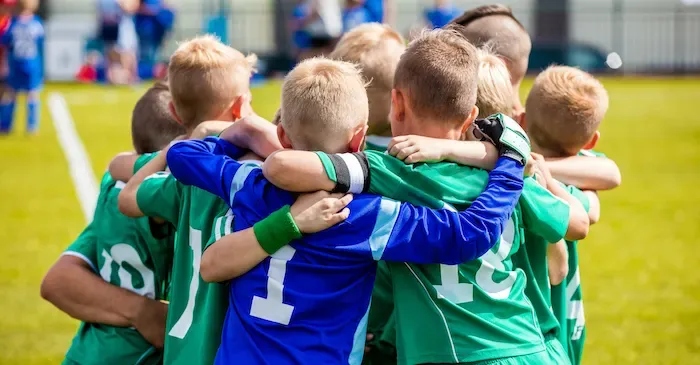
God, I can’t tell you how many times I’ve tried to write this essay. I kept getting stuck, pulled off track talking about various tangents within sport. I was led to wonder why writing about kids’ sports is so difficult for me, and I think it’s because it straddles the line of an extremely important life experience and a trivial thing that people tend to take too seriously. It all depends on how you look at it, and believe me, I’ve looked at it from many angles.
First off, I tend to take athletics more seriously than some. I’m not saying “sports.” Not talking about professional sports in which the athletes are paid. I don’t take those very seriously at all, funny enough. The athletics I take seriously are the levels of sport that’ll never make any money but will take up an obscene amount of time.
I played soccer from age 3 to 18, a formative experience that I mostly loved. There were a few rough years in there, but I still miss playing soccer the most, out of all of the sports I participated in. My other sports (track, rowing, distance running) felt like a lot of work that occasionally transcended to euphoria, but like, not that often. It was worth chasing. But soccer was different. Soccer was fun pretty much all the time.
After I stopped competing, I coached rowing for a long time, and then, when my older son was 5, I started helping out with his soccer team. I started doing it as a way to spend time with him while my younger son was in cancer treatment. I’ve written a lot about the cancer stuff here. I never intended for coaching soccer to go on this long, but it was fun and the kids were great. Then when the younger one was old enough to play soccer this fall, I would’ve felt guilty having coached the older one and not the younger one.
So this is undoubtedly why I’m spending so much time thinking about youth sports, having been a participant, parent, and coach. And I have some thoughts:
- We (parents) take youth sports way too seriously.
The older son seems to be closer to the end of his soccer career than the beginning. He doesn’t hate soccer but is in it for his friends. WHICH IS FINE. (I say, rocking myself slightly. This is fine. Everything’s fine.) I have no problem with this, especially since all of the kids on this team are great. He has learned so much from soccer that he doesn’t even realize. If he’s done, I’m happy with the experience he’s had. I don’t care if he doesn’t get a soccer scholarship, like Chad the Dad yelling at his kid every time he gets beat to the ball.
The tendency is to treat the tangible gains with too much importance - getting a starting spot, making the travel team, earning a scholarship (way down the road…), when the tangibles are rare. That's what makes them a big deal. When they do achieve something like that, sure, celebrate the shit out of it. Good job, kid! Way to make the team! You must’ve worked really hard and earned it! Right?
- We don’t take them seriously enough.
As in, we don’t take the intangibles seriously enough. Like earning a spot on the roster or starting line-up. But geez, there are so many other lessons and skills a kid can gain from a team sport: Did your kid learn how to cooperate with teammates? To shake their opponents’ hands after the game and tell them good game? How to listen to and respect an authority figure outside of family and school? How to speak up for themselves when they had a problem with a teammate? Or to stick up for their teammates if they saw one being treated poorly? I have seen all of these lessons learned by kids on my son’s team time and again. These are the lessons that make me glad my son has stuck it out as long as he has, despite waning interest.
- We try to relive our sporting past through our kids.
Yeah this is an obvious one, but it keeps happening. We didn’t make varsity, or didn’t get the scholarship, or didn’t play as much as we’d have liked, but goddammit, our kid isn’t going to suffer the same fate! So we sign the kid up for lessons and higher and higher levels of teams, and we yell on the sidelines because suddenly, we can see the game in a way we never could as a player - nevermind our own improvements in spatial reasoning, focus, and life experience that account for this change. Our kid is going to UNDERSTAND this sport and WORK until they have everything we never had!
Just, no. Stop that.
Kids should be having fun playing sports when they’re in elementary school. If they're playing to keep a parent happy, they are learning how to regulate the parent's emotions and not their own. If they’re getting super intense and yelling at refs from the sidelines, they’re watching a parent do that. It's possible those parents should rethink their choices. Maybe take up cycling or something.
—------------------------
The other reason I’ve struggled to write this is because there’s no right answer. But when I start to get too intense about whatever’s going on (like my sons getting deeper into school age and sport involvement and it feels like time is going too fast and how are they already playing these sports and before we know it they’ll be in COLLEGE…), I have a habit of overthinking. I try to drill down on the purpose of a thing, figure out what’s important about it. And there are just so many answers. Youth sports do many different things for each kid. When I was a little little kid, it was a way to get energy out. I'm sure I learned lots of intangibles too - cooperation, sportsmanship, and so on. Later, sports became part of my identity. When did that change happen? When did youth sports transition from an activity to a passion? And when did I care less about how fun it was than what others' thought about my involvement?
Regardless, keeping kids involved in activities that build them up, around people who build them up, seems like the best possible thing to do for them. Hopefully they’ll find their thing that will later become a passion, but how can they know that unless they try a bunch of different things? I’m so thankful for 6-week sessions of park district sports. Both of my boys played basketball for one session and then never asked about basketball again. Nothing against basketball! It just wasn’t their thing, and we figured that out by giving it a try. We’re giving soccer a longer try, but neither of them will major in soccer in college. Soccer probably isn’t a career path. It’s just fun.
And can’t that be ok? For it to be fun for 9-year-olds to spend Saturday mornings doing something fun with their friends for the sake of having fun? I ask this of myself, knowing I never (or rarely) do anything without considering its purpose. Time is too valuable.
There is a conversation to be had about travel sports, about if they start too early for too young of kids nowadays, but my opinions are uninformed. My boys aren't in travel sports, but they are on a swim team. Is that the same level of intensity and commitment? Maybe. Swimming is a lot. Like a LOT. But we're not traveling every weekend. They are having fun and are directing the ship overall. They sometimes have days they want to skip and we encourage them to remember their goals, but also, if they miss a day every once in a while, it's alright. There's a balance to be found.
But maybe the "self-directed" part is really what I'm striving for. Scaffold the community. Put structures in place to give some substance to the activity, and then let go. We owe it to kids to let them figure things out for themselves, to decide for themselves. Yes, we can intervene sometimes. Yes, we can assist and drive them to practice and support them when they're down. We don't have to be monsters or totally hands off. But imagine it: kids taking ownership of their own participation, kids deciding they want to be there and then choosing to play hard and do their best because they want to, or kids asking to try out for that next level because they want the challenge. What an incredible lesson. They'll never have it unless we take ourselves out of the driver seat and let them take the wheel for themselves.
Member discussion